Testing / Dietary supplements
Dietary supplements
Label verification, active content, elemental impurities and microbial quality
| Brands verifying contract manufacturing output |
| Importers performing incoming goods control |
| Retailers and marketplaces auditing third-party listings |
| Formulators confirming stability of a new presentation |
Supplement testing answers whether the label is true and whether the product is clean. Active content is quantified against a reference standard and compared with the declared amount; elemental impurities are determined by ICP-MS against ICH Q3D limits; microbial quality is established by enumeration under USP <61>, which for an oral product is the correct test rather than sterility.
The declared active is quantified against a calibrated reference standard, usually by HPLC with ultraviolet or mass spectrometric detection depending on whether the compound has a usable chromophore. The result is expressed both as an absolute amount per unit and as a percentage of the declared claim.
Content uniformity is a separate question from mean content. A batch can average exactly the declared amount while individual units vary widely, which is why uniformity is determined across ten units rather than inferred from a composite. A composite sample deliberately destroys the information that uniformity testing exists to surface.
Botanical and multi-ingredient products raise a specificity problem: matrix components frequently co-elute with the analyte, and a method that has not been shown to be specific in that matrix will report the matrix as active substance.
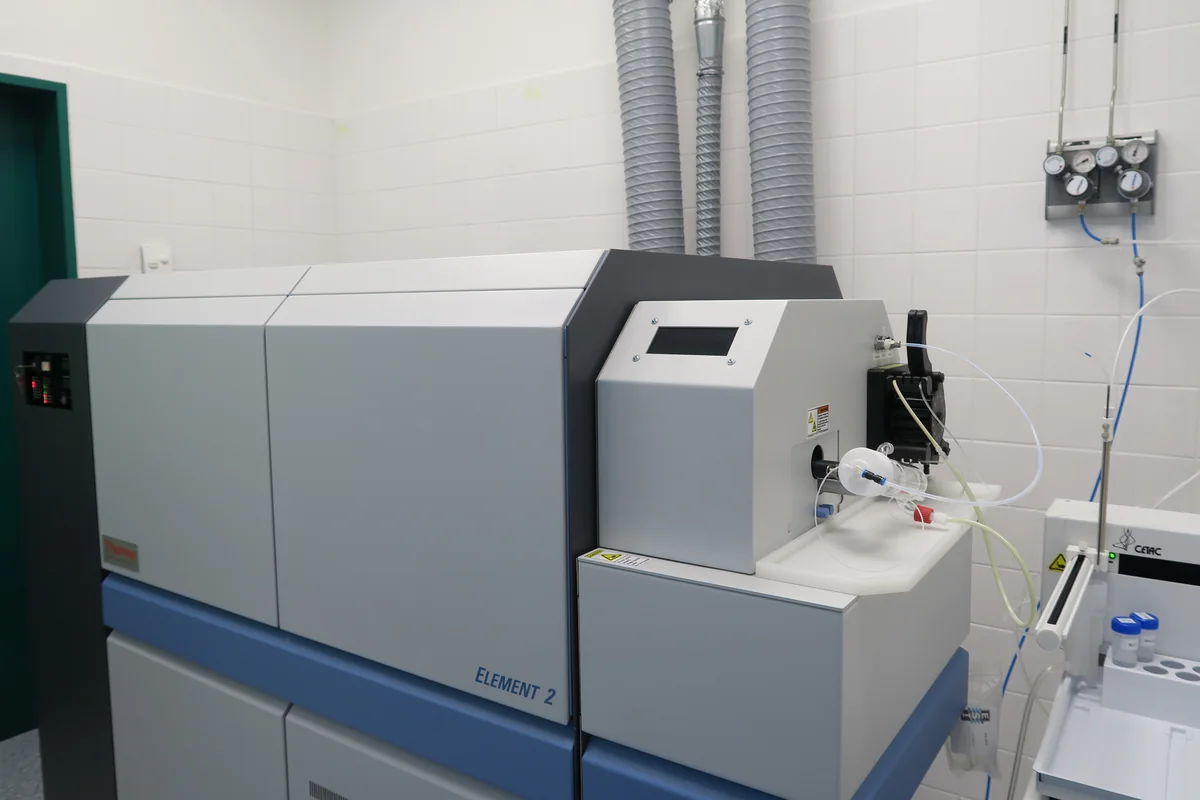
Botanical raw materials concentrate elements from soil, so cadmium and lead in plant-derived supplements are a supply-chain reality rather than an anomaly. Marine-derived ingredients carry arsenic and mercury for the same reason.
ICH Q3D permitted daily exposures apply per day of intended intake, so a limit expressed per gram of product depends on the recommended serving. A concentration acceptable in a product taken at 250 milligrams daily may not be acceptable in one taken at three grams.
Arsenic requires a further distinction. Total arsenic includes organic forms of very low toxicity, particularly in seaweed and seafood-derived products, so a total figure can look alarming while the inorganic fraction that matters is small. Speciation is a separate chromatographic determination and is offered where the total result warrants it.
| Question | Determination | Reported as |
|---|---|---|
| Is the declared amount present | HPLC-UV or LC-MS against standard | mg per unit, percent of claim |
| Is every unit the same | Content uniformity, ten units | mean, range, RSD |
| Heavy metals | ICP-MS after digestion | µg/g against Q3D per serving |
| Microbial quality | USP <61> TAMC and TYMC | CFU per gram |
| Identity of a botanical | Chromatographic fingerprint | match or no match |
Oral solid dosage forms are not required to be sterile and a sterility test on one produces no useful information. The correct determination is enumeration under USP <61>, with specified organism testing under USP <62> selected according to the ingredient profile.
Botanical and animal-derived raw materials carry higher baseline bioburden than synthetic actives, and that is expected rather than alarming. What matters is whether counts sit within the specification for the dosage form and whether the specified organisms are absent.
Method suitability is more often a live issue here than with synthetic material, because supplements frequently contain antimicrobial ingredients. Where the product suppresses growth, the counting method is modified until recovery is demonstrated, and the modification is reported.
Elemental impurities
Are there heavy metals, and at what concentration?
USP <61>Microbial enumeration
What is the bioburden?
GC-MSResidual solvents
What is left over from synthesis and purification?
Karl FischerWater content
How much of the mass is water?
LC-MSIdentity by mass spectrometry
Is the labelled compound actually present?
| Form | Amount |
|---|---|
| Tablets or capsules | One unit per determination |
| Content uniformity | Ten units from a single batch |
| Powder or bulk | 5 g |
| Liquid | 50 mL |
| Microbiology | Two additional unopened units |
Turnaround is confirmed with the quotation. Microbiological determinations are governed by incubation and cannot be shortened by expediting.
Does a supplement need a sterility test?
No. Oral dosage forms are not required to be sterile. Microbial enumeration under USP <61> is the appropriate determination, with specified organism testing under USP <62> where the ingredient profile warrants it.
Why test ten units for content uniformity?
Because a batch can average the declared amount while individual units vary widely. A single unit, or a composite of several, hides exactly the variation the test exists to find.
Are heavy metal limits absolute or per serving?
Per day of intended intake. ICH Q3D sets permitted daily exposures, so the acceptable concentration in a product depends on its recommended serving size.
Is total arsenic a fair measure?
Not always. Marine and botanical materials contain organic arsenic of very low toxicity. Where a total result is high, speciation separates the inorganic fraction that carries the risk.
Updated 2026-09-01