A certificate that says
what was measured.
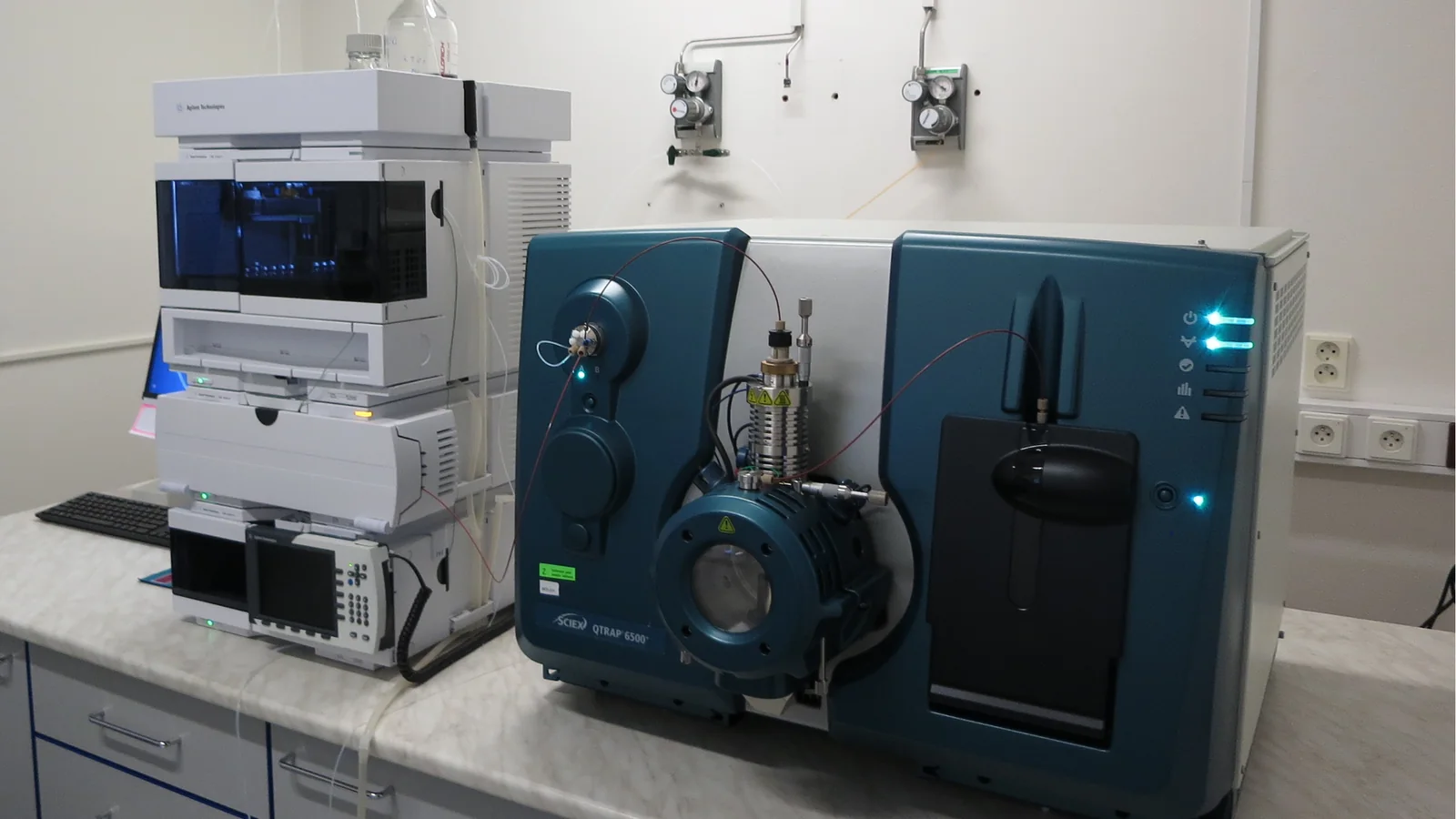
ANALYTON tests research peptides, dietary supplements and cosmetic actives. Identity is confirmed by mass, not by retention time. Content is reported in milligrams, not only as a purity percentage. Determinations are named after the compendial chapter they were actually run under.
Testing since 2019. Dietary supplements first, then peptides and other actives.
| Identity | Measured mass against theoretical, Δ in Da |
| Purity | Area % at 214 nm, chromatogram attached |
| Content | Net peptide content, % and mg per vial |
| Water | % w/w, coulometric |
| Limits | Numeric LOD and LOQ per analyte |
Endotoxin, microbial, elemental and residual solvent determinations are ordered alongside and reported on the same certificate.
A peptide reported at 99 percent purity commonly contains 70 to 85 percent peptide by mass. The two figures answer different questions and both are needed. Chromatographic purity is a ratio within the peptide-related material detected at 214 nm; trifluoroacetate counter-ion at 10 to 25 percent of vial mass, water at 5 to 15 percent and residual salts are all invisible to it while still occupying the vial.
Trifluoroacetate arrives during reversed-phase purification, where 0.1 percent trifluoroacetic acid acts as the ion-pairing agent. It forms salts with lysine, arginine and histidine side chains and the N-terminus, and lyophilisation removes the solvent but not the salt. At 114 daltons per counter-ion, a peptide with three basic sites carries roughly 342 daltons of it.
Water follows, because a freeze-dried cake is porous and hygroscopic by construction. That is what makes it reconstitute quickly and also what makes it equilibrate with atmospheric moisture within minutes of exposure.
Net peptide content measures the mass fraction that is actually peptide. Combustion elemental analysis burns the sample and quantifies nitrogen and sulphur directly, which also removes the dissolution error affecting chromatographic quantitation of poorly soluble material. A vial labelled 10 mg at 78 percent content delivers 7.8 mg.
| Fraction | Typical | Seen at 214 nm |
|---|---|---|
| Peptide | 70–85 % | yes |
| Trifluoroacetate | 10–25 % | no |
| Water | 5–15 % | no |
| Residual salts | variable | no |
Theoretical counter-ion load is MW ÷ (MW + n × 114), where n is the number of basic residues. Measurement is not optional; the estimate is a sanity check.
Research peptides
Identity, purity, content and parenteral safety for synthetic peptides
02Dietary supplements
Label verification, active content, elemental impurities and microbial quality
03Cosmetic actives
Active concentration, preservative efficacy inputs, metals and microbiological quality
04Androgen receptor modulators
Identity, chromatographic purity, enantiomeric purity and content for non-steroidal small molecules
Identity by mass spectrometry
Is the labelled compound actually present?
Chromatographic purity
What fraction of the peptide-related material is the target?
Net peptide content
How many milligrams of peptide are actually present?
Bacterial endotoxins
Is the material pyrogenic?
Microbial enumeration
What is the bioburden?
Elemental impurities
Are there heavy metals, and at what concentration?
Most of the confusion in this market is created by reports that describe one test using the name of another. Four cases account for nearly all of it.
Microbial enumeration
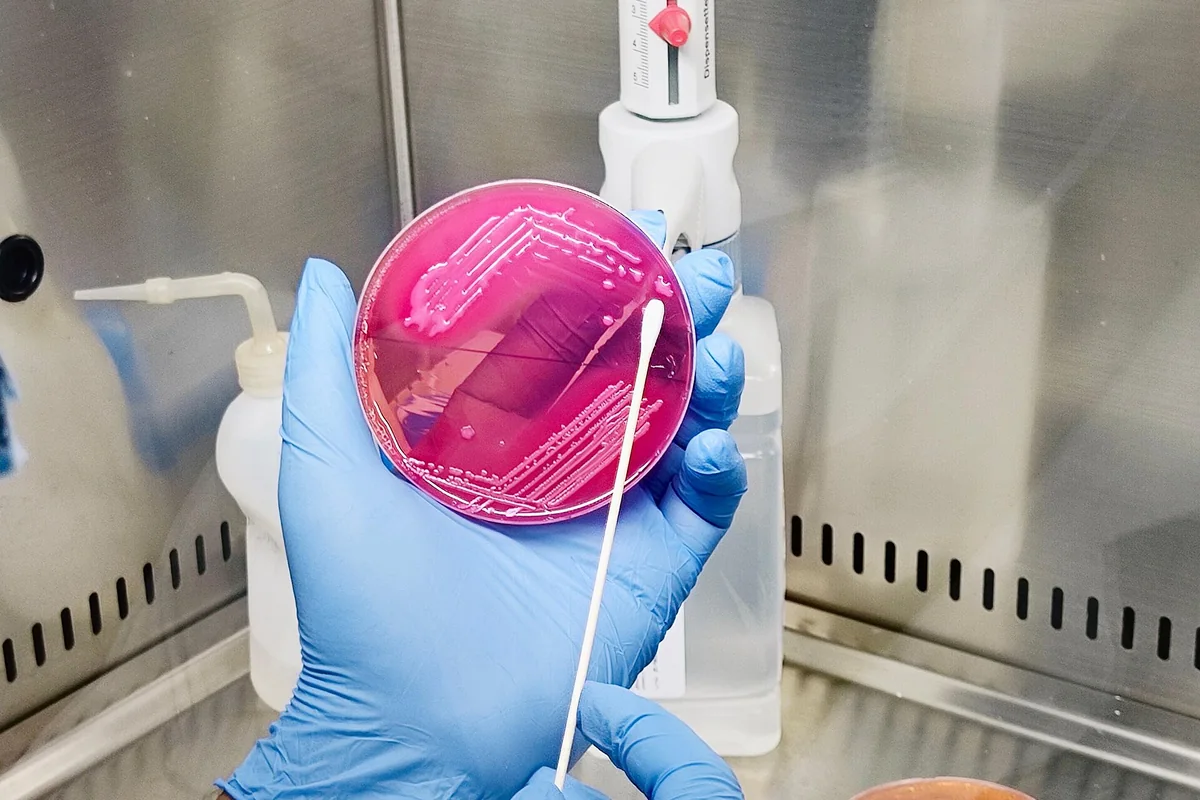
USP <61>. Total aerobic microbial count and total yeast and mould count, reported in colony forming units. An enumeration test for non-sterile products.
Not "sterility"
USP <71> is a different test: membrane filtration or direct inoculation under aseptic conditions, fourteen days, growth or no growth. A pass on <61> is not a sterility result and is never reported as one.
Identity by mass
Theoretical and measured molecular mass, both stated, with the difference in daltons. Sequence confirmation by tandem MS where the question requires it.
Not a retention-time match
Co-elution with a reference standard is supporting evidence, not identification. Two compounds of similar hydrophobicity elute at the same time.
Numeric detection limits
LOD and LOQ stated per analyte, with the unit and the expanded measurement uncertainty at k = 2.
Not "below a fraction of a dose"
A detection limit expressed relative to a typical dose cannot be converted into anything, compared with anything, or checked by anyone.
Elemental impurities by ICP-MS
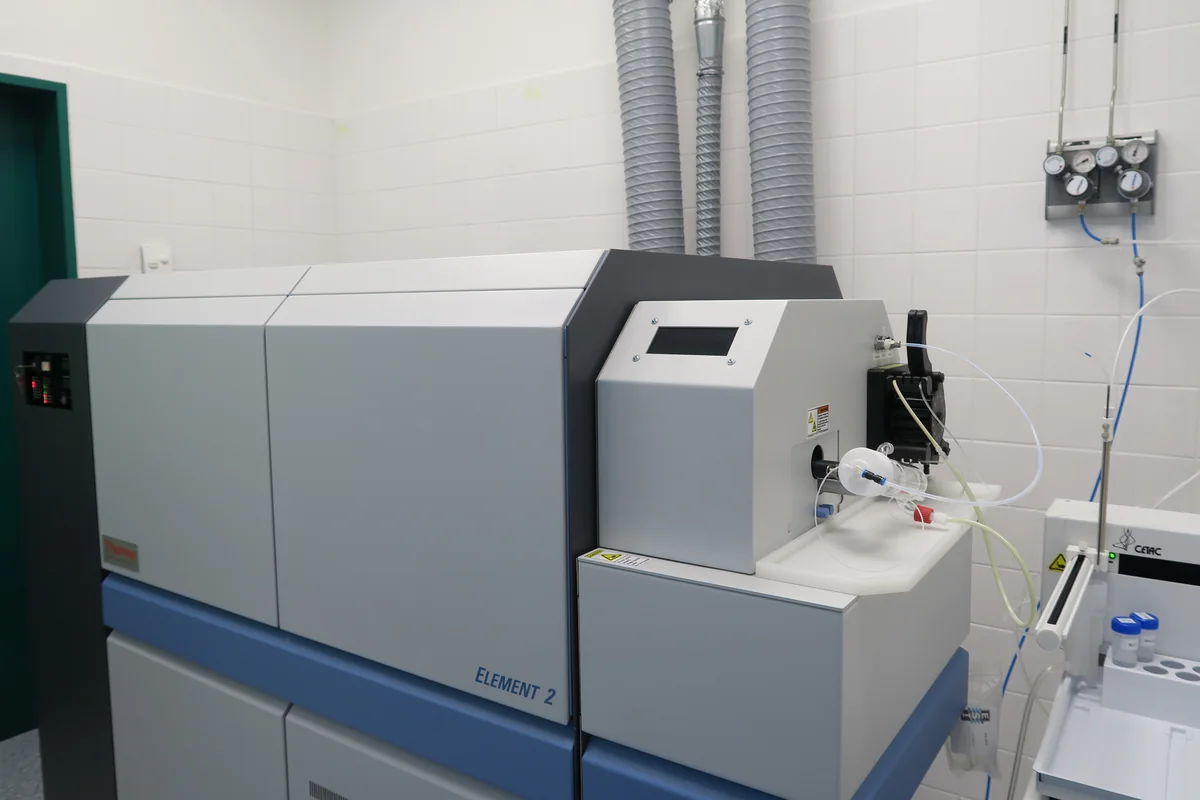
Microwave digestion followed by inductively coupled plasma mass spectrometry, reported against ICH Q3D limits at parts per billion.
Not an XRF screen
Energy-dispersive X-ray fluorescence is three to six orders of magnitude less sensitive. "Not detected" at parts per million says little about a parts-per-billion limit.
The full price list is published: every determination and every panel, in US dollars, with the method behind each line and what it actually measures. Panels are cumulative and cost less than their components ordered separately, because receipt, preparation and reporting happen once, and both figures are shown.
| Panel | USD |
|---|---|
| Identity and purity | 341 |
| Content | 525 |
| Parenteral safety | 1025 |
| Full characterisation | 1730 |
A certificate of analysis describes the sample that was received. It describes the batch that sample came from only to the extent that the sample was representative of it, and it says nothing at all about a different batch carrying the same label.
This distinction is where most published testing loses its meaning. A supplier who submits one favourable batch and reprints the certificate against later production has not misrepresented the laboratory; they have misrepresented their own manufacturing. Verification of a certificate proves the document is genuine. It does not prove the vial in front of you came from the batch on the document.
Two mechanisms address this, and ANALYTON is being built around both: recurring batch testing, where a defined proportion of production is tested on a schedule rather than on request, and blind acquisition, where the laboratory purchases the sample through the ordinary sales channel.
| Describes | the submitted specimen |
| May describe | the batch, if sampling was representative |
| Does not describe | any other batch or unit |
| Is not | an approval, endorsement or safety assessment |
Recurring batch testing and blind acquisition are in preparation. Enquiries from manufacturers and distributors are welcome now.
Purity is not content: why a 99 percent peptide is 78 percent peptide
HPLC purity and net peptide content answer different questions. A peptide at 99 percent purity typically contains 70 to 85 percent peptide by mass. Where the rest of the mass goes, and how each figure is measured.
GuideUSP 61 is not a sterility test
USP <61> counts organisms in non-sterile products and reports colony forming units. USP <71> asks whether any viable organism is present in a sterile product, over fourteen days. The two are routinely confused, and the confusion matters most for injectables.
GuideHow the 5 EU/kg/hour endotoxin limit is calculated
The parenteral endotoxin limit is 5 EU per kilogram of body weight per hour, and 0.2 EU/kg for intrathecal administration. How the limit converts into a per-vial figure, and why a result without spike recovery cannot be relied on.
GuideHow to read a certificate of analysis, and what it cannot tell you
A field-by-field guide to reading an analytical certificate: which figures carry information, which phrases are empty, and why verification proves the document rather than the vial in your hand.
What is the difference between purity and net peptide content?
Purity is the target peak area divided by total peak area among species detected at 214 nm. Net peptide content is the fraction of total sample mass that is peptide. A vial can be 99 percent pure and 78 percent peptide at the same time; trifluoroacetate at 10 to 25 percent and water at 5 to 15 percent are invisible to the purity measurement.
Is TAMC and TYMC a sterility test?
No. TAMC and TYMC are enumeration tests under USP <61> for non-sterile products, reported in colony forming units. Sterility is USP <71>, a qualitative test with fourteen-day incubation under aseptic conditions.
Can a sterile product still contain endotoxin?
Yes. Endotoxin is a heat-stable lipopolysaccharide that survives autoclaving and passes through sterilising filters. Sterility and pyrogenicity are independent determinations.
What does ANALYTON test?
Research peptides as the primary matrix, plus dietary supplements for label claim, content uniformity, elemental impurities and microbial quality, and cosmetic actives for concentration in the finished formulation and preservative efficacy.
Updated 2026-09-01